How clearance fits into the journey
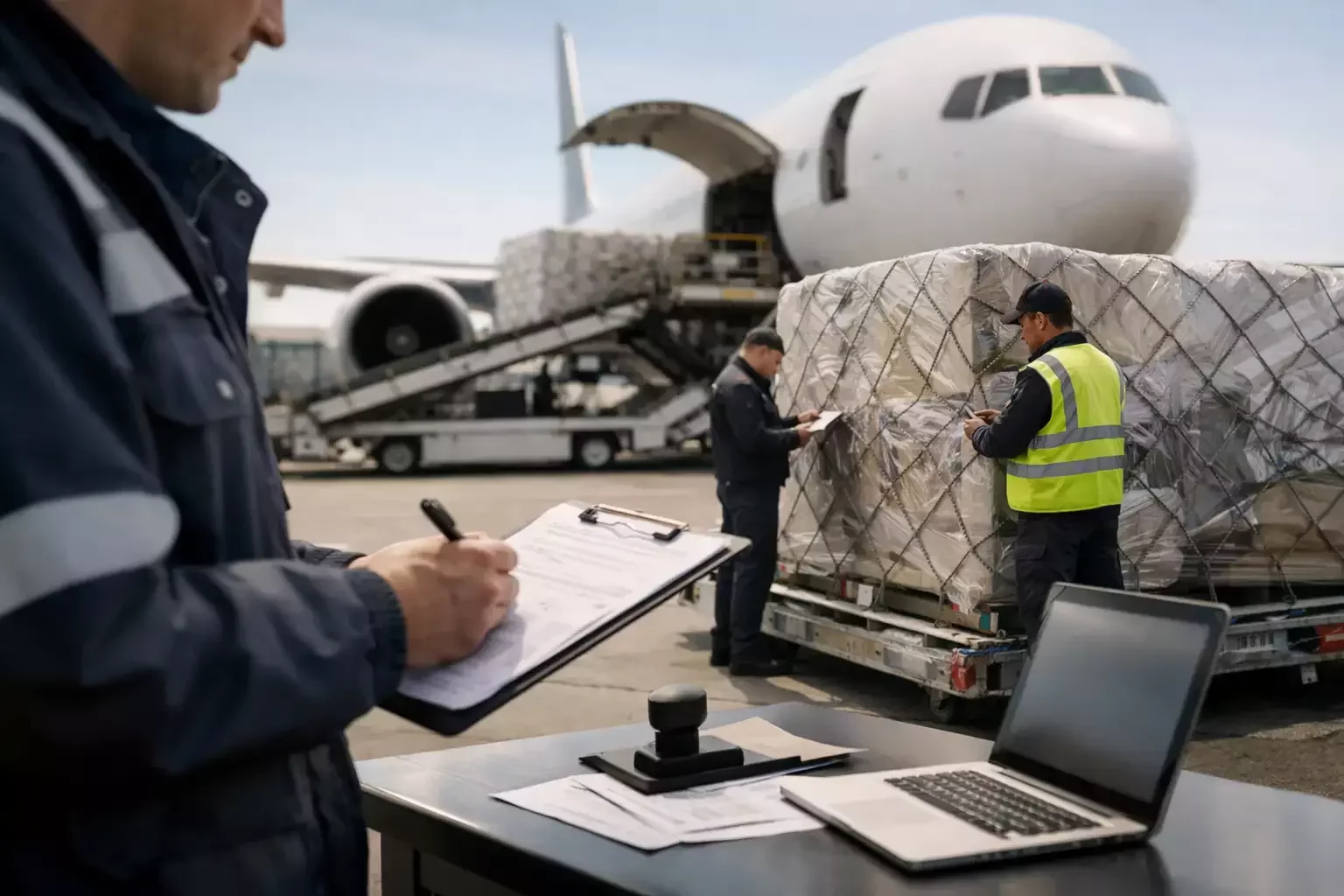
Customs clearance allows goods to move through the required border formalities. For air freight, it needs to fit around the flight schedule, airport handling and onward delivery.
This guide explains the main stages and the information to prepare before a commercial shipment moves.
What customs clearance covers
The customs declaration describes the goods, their value, origin and intended procedure. Customs may ask for supporting documents or examine the cargo before releasing it.
Requirements vary by country and product. For UK movements, confirm whether Great Britain or Northern Ireland rules apply to your shipment.
Prepare before departure
Agree who will handle declarations at each end. Send the commercial invoice, packing list and available transport details early enough for review.
For exports, check that the recipient can import the goods at destination. For imports, confirm who will provide instructions and how any duty and import VAT will be handled.
Provide accurate goods information
Give a clear product description, commodity code, value, origin and quantity. Explain what the goods are made from and used for where this helps identify them.
Flag returns, repairs or temporary movements before the declaration is prepared. These may need a different procedure and supporting records.
The main clearance stages
The sequence depends on the route and procedure, but the main steps are document review, submission, any customs checks and release.
Document Review and Entry Preparation
The customs team checks the documents and prepares the declaration using the shipment information and your instructions.
Resolve inconsistent package counts, unclear values or missing licence information before submission wherever possible. Confirm the final version of each document.
Customs Submission and Risk Assessment
Once submitted, the declaration may be released or selected for further checks. A request for documents does not necessarily mean something is wrong.
Keep someone available who can answer questions about the goods and supply evidence promptly.
Examination, Release and Terminal Collection
If an examination is required, the delivery plan may need to change while the goods are held.
Customs release does not always mean cargo is immediately available from the terminal. The handling agent must also complete its release arrangements before onward transport can proceed.
What can delay clearance
- Vague goods descriptions or incomplete classification details.
- Differences between the invoice, packing list and shipment.
- Missing origin evidence, licences or clearance instructions.
- Unresolved payment arrangements.
- Documents supplied too late for review.
Customs checks can still occur when the paperwork is correct, so avoid making delivery commitments that depend on immediate release.
Controlled and specialist cargo
Tell the team about regulated products, dangerous goods and any special handling needs before dispatch. Customs requirements and airline acceptance are separate checks; both may affect the shipment.
Send available product information and approvals with the initial documents so any gaps can be identified.
Plan onward delivery
Share the delivery address, receiving hours, unloading needs and booking-slot requirements before arrival.
Onward transport should be coordinated with customs status and terminal availability. Keep the recipient informed if a hold or examination changes the expected delivery time.
Keep the final records
Keep the final invoice, declaration and supporting records together under the shipment reference. Raise any suspected error with the customs team so it can be reviewed.
For repeat shipments, use a consistent document format and update product information when the goods or trading arrangements change.
Need help with air freight customs clearance?
ACS Air Freight can help with commercial air cargo clearance and onward delivery. Send the route, goods details and available paperwork to our team.