
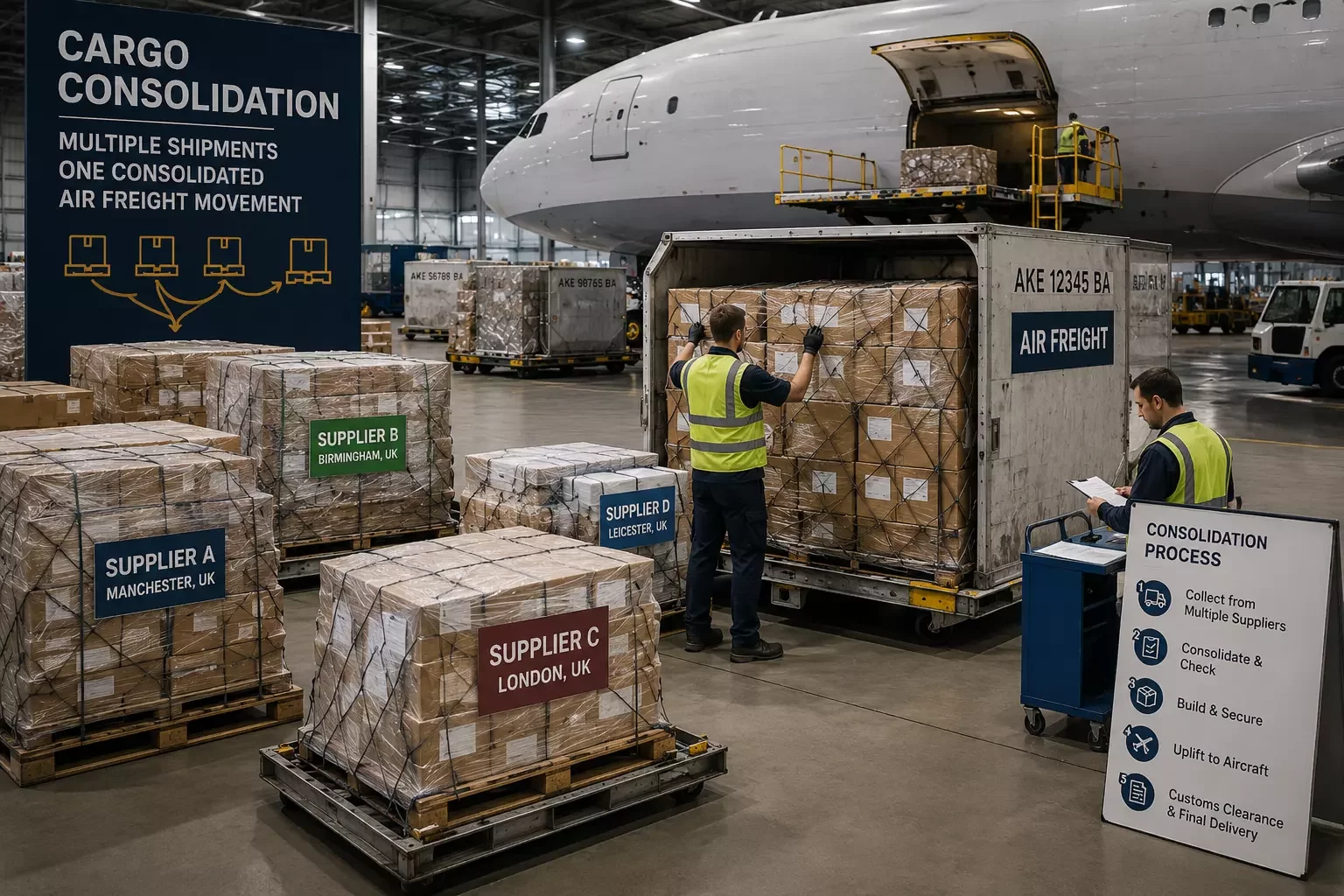
When consolidation may be useful
Air freight consolidation groups smaller consignments into a shared airline movement. It may also form part of a plan to bring several supplier orders together before dispatch.
It can suit shipments with some timing flexibility, but the total cost and delivery schedule need checking against a separate movement.
Define the type of consolidation
Confirm whether you need space on a consolidated air service, several orders combined for your business, or both. The handling, documents and timing can differ.
Provide the cargo details and ready dates for each consignment so compatibility and routing can be assessed.
Compare the total cost
Sharing a planned movement may offer a useful rate for smaller shipments. Coordinating several orders can also simplify the receiving plan.
Check any additional handling, storage or preparation costs. Consolidation does not guarantee a lower total price or a faster journey.
Check the planned schedule
Ask which departure the cargo is planned for, when it needs to be ready and how individual consignments will be identified.
For supplier orders being brought together, agree what happens if one order is late. You may prefer to move the ready goods rather than wait.
Assess cargo suitability
Consolidation may suit regular, compatible cargo with flexible deadlines. Urgent goods may need a different service if waiting for the planned departure would miss the required date.
Dangerous goods, temperature-sensitive items and unusual pieces need assessment. Their requirements may limit which consignments can move together.
Plan around supplier readiness
Prepare a list of the supplier locations, order references, goods, ready dates, package counts, dimensions and weights.
Agree the latest useful departure and delivery times. Identify which orders can wait and which need a separate option if delayed.
Documentation and Compliance Review
Keep each consignment’s commercial and customs information identifiable. Review invoices, packing lists and any specialist documents against the planned movement.
Grouping cargo for transport does not remove the need for the appropriate customs declarations or product approvals.
Handling, Build and Flight Uplift
The handling plan should account for package condition, identification, dimensions and any required preparation. Repacking or additional handling should be agreed where needed.
Ask for confirmation of what has been received and whether any consignment is still outstanding.
Arrival and Onward Delivery
Confirm how individual consignments will be released at destination and which customs and delivery services are included.
Share receiving hours, access restrictions and delivery references before arrival. Cargo availability may differ from the flight arrival time.
Compare the available services
Ask the freight team to compare consolidation with the other suitable options. Review the schedule, service scope, total charges and the effect of a late supplier.
Agree who will coordinate the orders and provide updates.
Review repeat movements
For repeat movements, review whether the chosen schedule still matches supplier readiness and stock needs. Track additional handling or waiting costs as well as the air freight rate.
Change the plan when an order becomes urgent or the cargo requirements differ.
Discuss your consolidation requirements
Send ACS Air Freight the consignment details, supplier locations and required timing. Our team can assess whether a consolidated movement is suitable.