
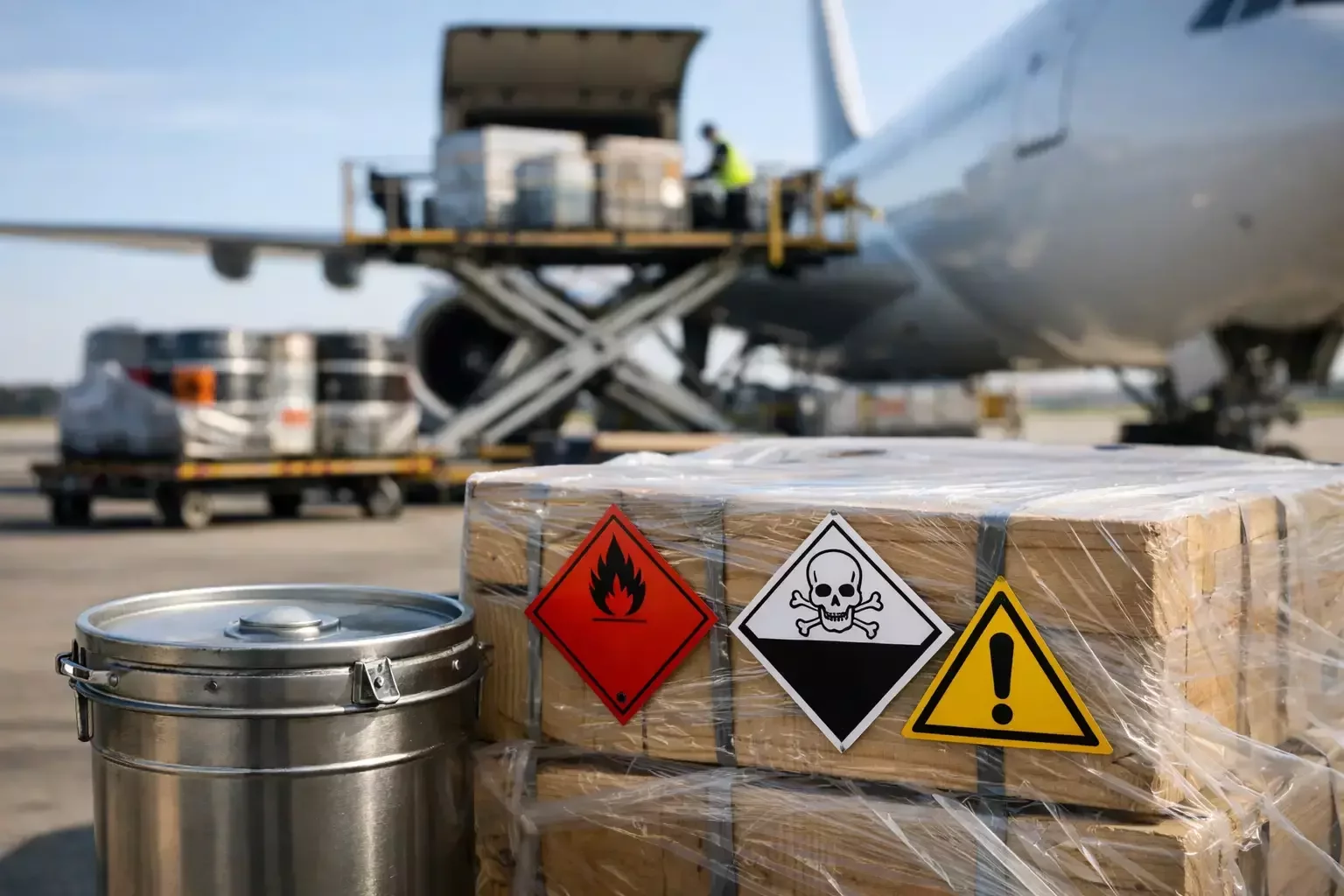
Checks to make before booking
Before booking dangerous goods air freight, check the product, packing and proposed route together. A shipment may need specialist preparation or a different service from ordinary cargo.
Use these checks to prepare an enquiry and identify what still needs to be confirmed.
Identify the contents
Tell the freight team about batteries, chemicals, aerosols, gases, dry ice and any hazardous components in equipment. Include residues in used machinery where relevant.
Send a clear product description, manufacturer’s information and a current safety data sheet where applicable. Do not rely on a general description such as “spare parts”.
Confirm the classification
Have the transport classification confirmed by someone competent to assess it. The relevant UN number, proper shipping name, hazard class and packing group, where applicable, determine the next steps.
Air transport requirements must be checked even if the goods have previously moved by road or sea. Any exception must be assessed against its specific conditions.
Check the proposed packing
Provide the quantity in each package, the proposed packaging and the total package count. These details need checking against the applicable packing instruction and aircraft restrictions.
A strong outer box alone does not establish compliance. If specialist packing is needed, arrange it before committing to a ready date.
Match documents, marks and labels
The required marks, labels and transport documents must match the actual goods and packing. Changes to quantities or the packing arrangement may require revised documents.
Agree who will prepare and check the dangerous goods paperwork. Keep the commercial invoice and packing list consistent with the final shipment.
Allow for airline acceptance
The airline or handling agent will carry out acceptance checks. A pre-shipment review helps identify missing details, but does not replace those checks.
Allow for specialist preparation and the applicable cargo cut-off time. If the cargo changes after booking, tell the freight team before it moves.
Check the complete route
Acceptance can depend on the airline, aircraft type, destination and transit points. Some goods cannot travel by air; others have restrictions that limit the available services.
Destination customs and import requirements also need checking. Ask the recipient to confirm any local approvals needed for the goods.
What to include in your enquiry
Include these details in your enquiry:
- Product description and confirmed classification, if available.
- Safety data sheet or manufacturer’s technical information.
- Quantity per package, package count, dimensions and gross weight.
- Details of the proposed packing.
- Origin, destination, ready date and delivery deadline.
- Any known airline, customs or handling requirements.
Avoid gaps in the product information
For batteries, provide the chemistry, rating, condition and whether they are shipped separately, packed with equipment or installed in it.
For chemicals or mixed consignments, list each product separately. Incomplete information can prevent a suitable route or packing arrangement from being confirmed.
Need help with dangerous goods air freight?
Send our air freight team your product and shipment details. We’ll review the movement and explain what is needed before booking.