

A shipment can be ready at the factory and still miss its planned flight. In air cargo, packaging, documentation, security status and customs data must all be correct before freight is accepted at the terminal. Knowing how to prepare goods for air freight helps UK importers and exporters avoid rejected cargo, avoidable delays and unnecessary handling changes.
The required preparation depends on the commodity, destination, Incoterms, service level and whether the cargo is regulated. A pallet of non-hazardous machinery parts requires a different approach from temperature-sensitive pharmaceuticals, lithium battery products or high-value electronics. The objective is consistent: present cargo that can be handled safely, screened where required, cleared through export formalities and delivered to the airline in a flight-ready condition.
Confirm the shipment plan before packing
Preparation should begin with a clear shipment brief, not at the point the goods are collected. Confirm the commodity description, number of pieces, dimensions, gross weight, collection address, consignee details and required delivery date. These details allow the freight forwarder to assess suitable routing, airline acceptance requirements and the most appropriate handling method.
Accurate dimensions matter as much as weight. Airlines charge and plan capacity using chargeable weight, which may be based on the shipment's volume rather than its actual scale weight. More importantly, oversized, long or irregular pieces may need specific aircraft capacity, loading equipment or pre-booked terminal handling. A last-minute change in dimensions can affect the selected flight or prevent acceptance altogether.
Establish the agreed Incoterms at this stage. They determine where responsibilities sit for transport, export clearance, import duties and final delivery. If the commercial arrangement is unclear, customs declarations and delivery instructions can conflict later in the process.
How to prepare goods for air freight packaging
Air freight packaging must protect the goods through collection, terminal handling, security screening, aircraft loading, transit and final delivery. Cargo may be moved several times before uplift, including by forklift, pallet truck, roller bed or manual handling. Packaging that is suitable for local road transport is not always sufficient for international air cargo.
Use outer packaging that matches the product's weight, shape and fragility. Cartons should be strong enough to stack without crushing, with internal protection preventing movement or contact between components. Heavy items need durable crates, cases or pallets with adequate load-bearing capacity. If goods are packed in wooden packaging, check whether the destination requires ISPM 15-compliant treated and marked timber.
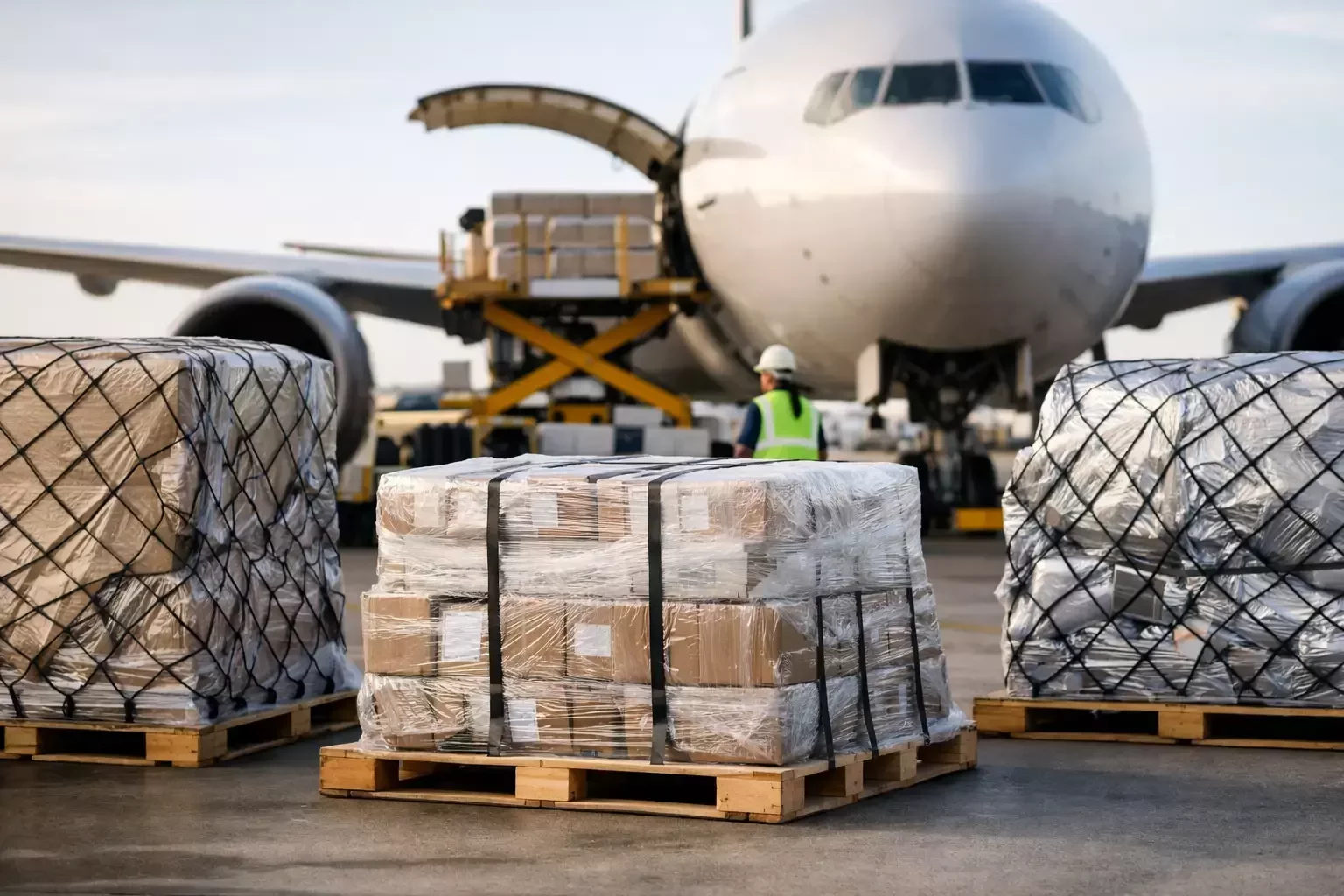
Palletised freight should be stable, square and securely stretch-wrapped or banded. Do not allow cartons to overhang the pallet edge, as this increases the risk of impact damage and makes mechanical handling less safe. Protect exposed corners, and ensure that labels remain visible after wrapping.
There is a balance to strike. Excessive packing increases volume and may raise the shipment's chargeable weight, while insufficient protection can lead to damage, repacking at the terminal or airline refusal. For high-value or fragile goods, purpose-built protective packaging is usually the more controlled option.
This is a Heading
Aircraft holds and terminals expose cargo to changes in temperature, pressure and humidity. Products with strict temperature requirements may need approved thermal packaging, data loggers or a managed temperature-controlled service. Similarly, moisture-sensitive machinery may require barrier materials, desiccants or corrosion protection.
Where goods are vulnerable to shock, tilt or vibration, use appropriate internal bracing and handling indicators. Such indicators do not replace suitable packaging, but they can provide useful evidence if the shipment is mishandled. Clearly identify any orientation requirements, provided the markings are appropriate to the commodity and handling process.
Check whether the goods are dangerous goods
Dangerous goods require specialist assessment before collection or booking. This includes many items that are routinely shipped in commercial supply chains, such as lithium batteries, aerosols, chemicals, paints, adhesives, fragrances, fuel-powered equipment and some electronic products.
Do not rely solely on a product name or an assumption that a small quantity is exempt. The shipper should provide the current Safety Data Sheet where applicable, alongside product details and battery specifications. A dangerous goods specialist can then confirm whether the goods are regulated for air transport, identify the correct UN number, packing instruction, classification and documentation requirements.
If the cargo is declared as non-hazardous, the information must still be accurate. Undeclared or incorrectly declared dangerous goods can create a safety risk and result in rejected cargo, enforcement action and disruption across the supply chain. Dangerous goods packaging, marks, labels and the shipper's declaration must be completed to the applicable air transport rules before the freight reaches the airport.
Prepare accurate commercial and customs documents
Documentation is not an administrative afterthought. It is the data set used to support export clearance, airline carriage and import customs processing. Incomplete or inconsistent information can delay departure even when the freight itself is packed correctly.
The commercial invoice should describe the goods precisely, state quantities and values, identify the buyer and seller, and include the currency and agreed Incoterms. Avoid vague descriptions such as 'parts', 'samples' or 'equipment'. A clearer description might state 'stainless-steel valve components for industrial water-treatment equipment'. Customs authorities need enough detail to identify what the goods are and assess the correct commodity code and origin treatment.
A packing list should show the contents of each package, including weights and dimensions where relevant. This is particularly useful for multi-piece shipments, mixed consignments and customs examinations. Supporting paperwork may include certificates of origin, licences, preference statements, product certificates or destination-specific permits.
For UK exports, ensure the exporter has the necessary customs registration details and that the export declaration arrangements are agreed before freight is delivered to the terminal. The data on the declaration must match the commercial documents and physical consignment. Differences in piece count, value, commodity description or weight often trigger queries that delay clearance.
Make the cargo ready for security screening
Air cargo security requirements can affect both packaging choices and cut-off times. Depending on the route, shipper status and nature of the goods, cargo may require screening before airline acceptance. Screening methods can include X-ray, explosive trace detection or physical examination.
Pack freight so it can be screened effectively. Dense, irregular or mixed-content consignments may require additional examination if the contents cannot be satisfactorily assessed by standard methods. Avoid sealing freight in a way that prevents necessary inspection, and make sure the packing list accurately reflects what is inside each piece.
Maintain control of the shipment before handover. Freight should be stored securely, protected from tampering and released only to authorised collection personnel. If cargo is collected from a third-party warehouse or supplier, give clear instructions on who can release it and what documents must travel with it.
Label, mark and count every piece
Each package should carry a durable label showing the consignee, destination and reference number. Where appropriate, include the shipper's details, piece number and handling instructions. For example, a shipment of five cases should be marked 1 of 5 through to 5 of 5. This simple control makes discrepancies easier to identify at collection, the export terminal and destination warehouse.
Remove or cover obsolete labels, barcodes and dangerous goods marks from reused packaging. Conflicting labels can cause uncertainty during handling and screening. Ensure that all information is readable, securely attached and positioned where it will not be damaged by pallet wrap or handling equipment.
Before collection, conduct a physical count and compare it against the packing list and booking information. Record the gross weight and dimensions of every piece, particularly where different-sized packages are included. A final check at this point is far easier than resolving a mismatch after the freight has been manifested for flight.
Build time into the handover
Air freight is often selected for urgency, but urgent does not mean documentation and compliance checks can be compressed without risk. Airport cut-off times vary by airline, destination, cargo type and security status. Dangerous goods, oversized cargo, temperature-controlled freight and shipments requiring customs intervention may need earlier delivery to the terminal.
Provide documents and cargo details early enough for a meaningful review. This gives the forwarder time to identify missing information, arrange specialist handling and confirm that the booking remains suitable. It also allows for practical contingencies, such as a collection vehicle arriving late, a packaging issue being found or customs information needing correction.
ACS Air Freight manages this process through a single operational point of contact, coordinating booking, document review, terminal delivery, customs formalities and onward movement. The most effective shipments are those where the shipper's preparation and the freight plan are aligned from the outset.
A controlled handover is the final step before airport acceptance. When the goods, documents and declarations all tell the same story, the shipment is in the best position to move as planned.
Need help preparing goods for air freight?
ACS Air Freight helps businesses prepare commercial cargo for international air transport, from packaging and documentation through to customs formalities, airline acceptance and final delivery.
Whether you're exporting machinery, high-value goods, dangerous goods or time-critical shipments, we coordinate the entire movement through a single operational contact.