

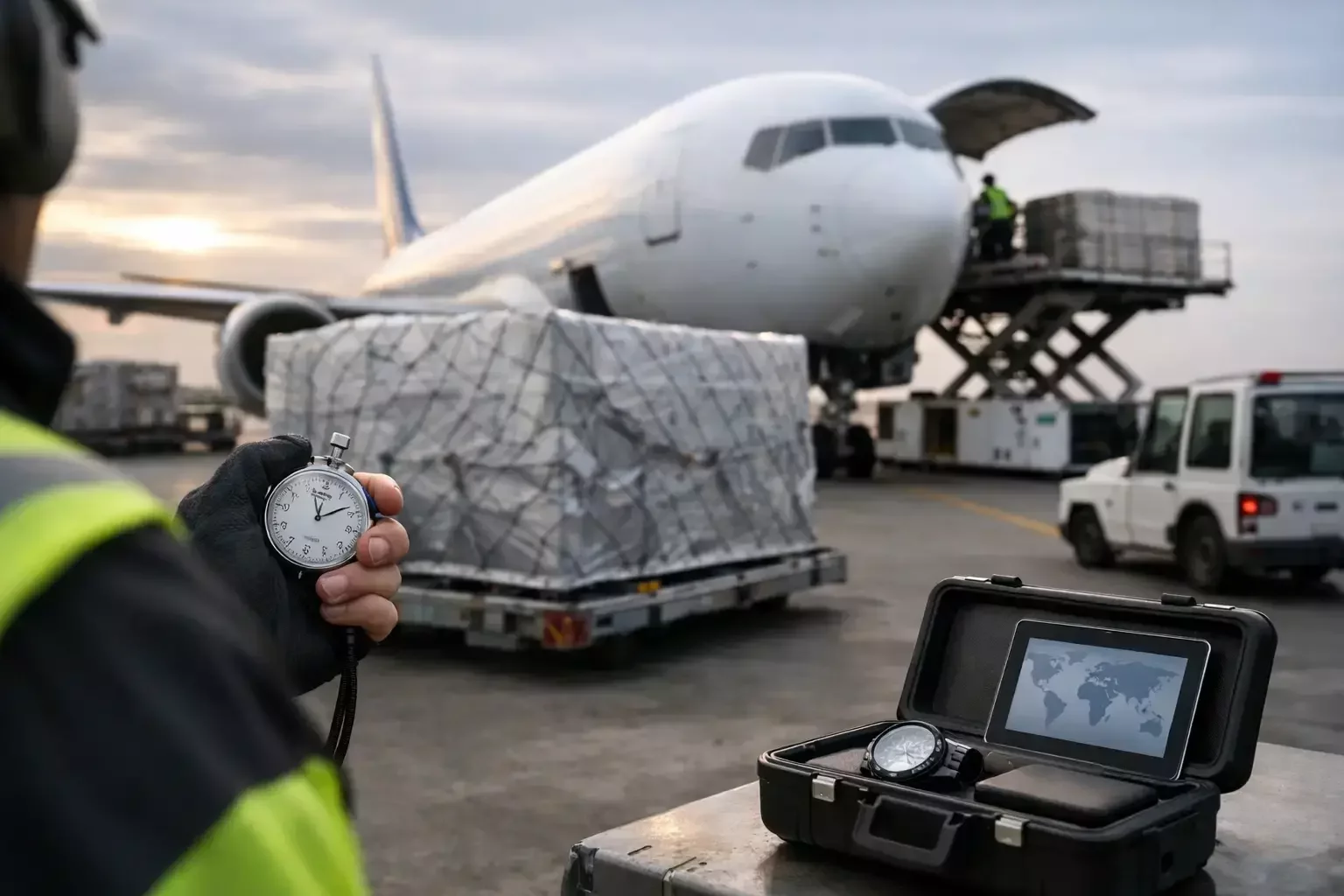
When a production line is waiting for a replacement component, a customer deadline depends on a high-value consignment, or a regulatory window is closing, the shipment cannot be treated as routine freight. Time critical logistics is the controlled management of cargo where delay creates a material operational, commercial or compliance risk.
For UK importers and exporters, speed is only one part of the requirement. The shipment must be correctly documented, accepted by the airline, processed through customs and delivered to the required point without avoidable handovers or uncertainty. A fast flight is of little value if the cargo is held at origin, stopped at the border or cannot be released for final delivery.
What Makes Logistics Time Critical?
A shipment becomes time critical when its delivery deadline is linked directly to business continuity or a fixed commercial event. This may include an aircraft-on-ground component, an urgent manufacturing part, a product required for a launch, a critical repair item or stock needed to prevent a supply interruption.
The deadline may be expressed as a specific date and time, but it is often more complex. Some consignments need to reach an airport terminal before an airline cut-off. Others must clear customs early enough to meet a booked delivery slot, site access restriction or onward production schedule. Effective planning works backwards from the actual point of need rather than simply selecting the earliest available flight.
This distinction matters because air freight schedules can change, terminal congestion can affect acceptance times and border processes may require additional information. Time critical movements need an operating plan that accounts for these variables from the outset.
The Core Controls in Time Critical Logistics
Urgent cargo should be managed as a sequence of connected controls, not a collection of separate bookings. The objective is to protect the shipment at every point where time can be lost.
Shipment assessment before booking
The first task is to establish what is being moved, where it must go, when it is required and what conditions apply. Cargo dimensions, weight, commodity, packaging, value and origin can all influence available routing options. For dangerous goods, the classification, packing instruction, labels and shipper documentation must also be reviewed before airline space is requested.
A practical assessment identifies the true deadline, the latest collection time, the terminal acceptance deadline and the expected customs release process. It should also consider whether the consignment needs priority handling, temperature control, security screening, specialist equipment or a dedicated final delivery arrangement.
At this stage, a freight forwarder should challenge assumptions. A direct flight may appear to be the quickest route, but it may have a late terminal cut-off or limited recovery options if uplift is missed. A route with a controlled connection and stronger handling capability may provide a more dependable outcome. The right option depends on the commodity, destination, deadline and tolerance for disruption.
Airline capacity and routing control
Securing space is not the same as confirming that cargo will travel as planned. Time-sensitive movements require close attention to booking status, flight timings, cargo acceptance requirements and the operational status of each routing leg.
Where timing is particularly tight, the routing should be assessed for exposure points such as short connection windows, airport handling constraints, restricted weekend operations or local customs closure periods. There is no universal best route. A direct service can reduce handling points, while a connection may offer earlier uplift or more frequent alternatives. The appropriate choice is the one that provides the best balance of transit speed, certainty and recovery capability.
Cargo consolidation can also be useful where it aligns with the deadline and provides reliable airline access. However, it is not suitable for every urgent movement. A consolidation programme may introduce fixed cut-offs and additional terminal processes, so it must be evaluated against the actual delivery requirement.
Documentation and customs readiness
Documentation is a frequent source of avoidable delay. Commercial invoices, packing lists, airway bill instructions, commodity descriptions, export declarations, licences and proof of origin must be accurate and available at the right time. Vague descriptions or inconsistencies between documents can lead to questions from airlines, handling agents or customs authorities.
For imports, customs clearance preparation should begin before the cargo arrives where possible. This includes checking commodity codes, customs value, Incoterms, importer details, applicable duties and any licences or controlled-goods requirements. The goal is not simply to submit an entry quickly, but to ensure the declaration is complete enough to support release without corrective action.
A single point of contact is particularly valuable here. It allows changes to the shipment, documents and delivery instructions to be coordinated without information being lost between separate providers. ACS Air Freight manages these stages as part of the wider movement, from booking and compliance review to customs formalities and final delivery coordination.
Terminal handling and flight uplift
Once cargo reaches the airport, the focus shifts to acceptance, security, build-up and flight uplift. Terminal acceptance deadlines are operational cut-offs, not flexible targets. Missing one can move a shipment to a later service even where the airline booking itself remains valid.
The cargo must arrive correctly packed, labelled and accompanied by the required paperwork. For regulated commodities and dangerous goods, this is especially important. An issue identified at acceptance can require repacking, relabelling or revised documentation, each of which may affect uplift.
Monitoring should continue after terminal handover. Confirmation of acceptance is useful, but it does not replace checking whether the cargo has been manifested and flown. If a planned uplift changes, the response should be immediate: establish the reason, identify the earliest recovery option and assess any effect on customs clearance or final delivery.
Arrival, customs release and final delivery
The job is not complete when the aircraft lands. Arrival handling, document availability, customs release and collection arrangements can all affect the final outcome. For a time-critical import, the final mile must be planned with the same care as the flight.
This may mean arranging delivery only after customs release is confirmed, booking a vehicle with the right equipment for the cargo, or coordinating delivery with a receiving site that has limited opening hours. High-value or specialist goods may also require controlled collection procedures and proof of delivery requirements.
At destination, clear communication is essential. The consignee should understand the expected arrival, any customs actions required from them and the likely delivery window. Surprises at this stage can turn an otherwise successful air freight movement into a missed operational deadline.
When Premium Urgent Handling Is Necessary
Not every urgent shipment needs the highest available level of priority. Escalated handling may be justified where a delay of hours has serious consequences, but it can be unnecessary where the deadline has reasonable flexibility. The correct service level should reflect the cost of delay, not simply the desire for the fastest possible transit time.
Businesses should also distinguish between a shipment that is urgent because it was planned late and one that is genuinely time critical. Both may need rapid action, but the latter calls for a more detailed risk assessment, active monitoring and defined contingency arrangements. This helps procurement and supply chain teams make proportionate decisions under pressure.
Information That Helps a Forwarder Act Quickly
Early, complete information gives a time-critical shipment its best chance of moving without disruption. The most useful details are the cargo description, dimensions and weight, collection and delivery addresses, required delivery time, commodity value, Incoterms, customs status and any handling restrictions.
For dangerous goods, provide the safety data and classification details as early as possible. For controlled or regulated products, confirm whether licences, certificates or destination-specific approvals are needed. Waiting until the collection vehicle is due to identify these requirements limits routing options and increases the chance of a missed flight.
It is equally helpful to state which deadline is fixed and which elements have flexibility. If a consignment must arrive before a production shift begins but can use any suitable airport route, the planning team can focus on the options that protect that result. If only one delivery slot is acceptable, that constraint needs to shape the entire movement plan.
A well-managed urgent air cargo movement is built on preparation, visibility and decisive action when conditions change. Give the freight team the full operational picture early, and they can protect the deadline rather than merely react to it.
Need support with time-critical logistics?
ACS Air Freight manages urgent international shipments where delivery deadlines cannot slip.
From airline booking and compliance checks to customs formalities, terminal handling and final delivery, we coordinate every stage through a single operational contact to help protect your most critical movements.