

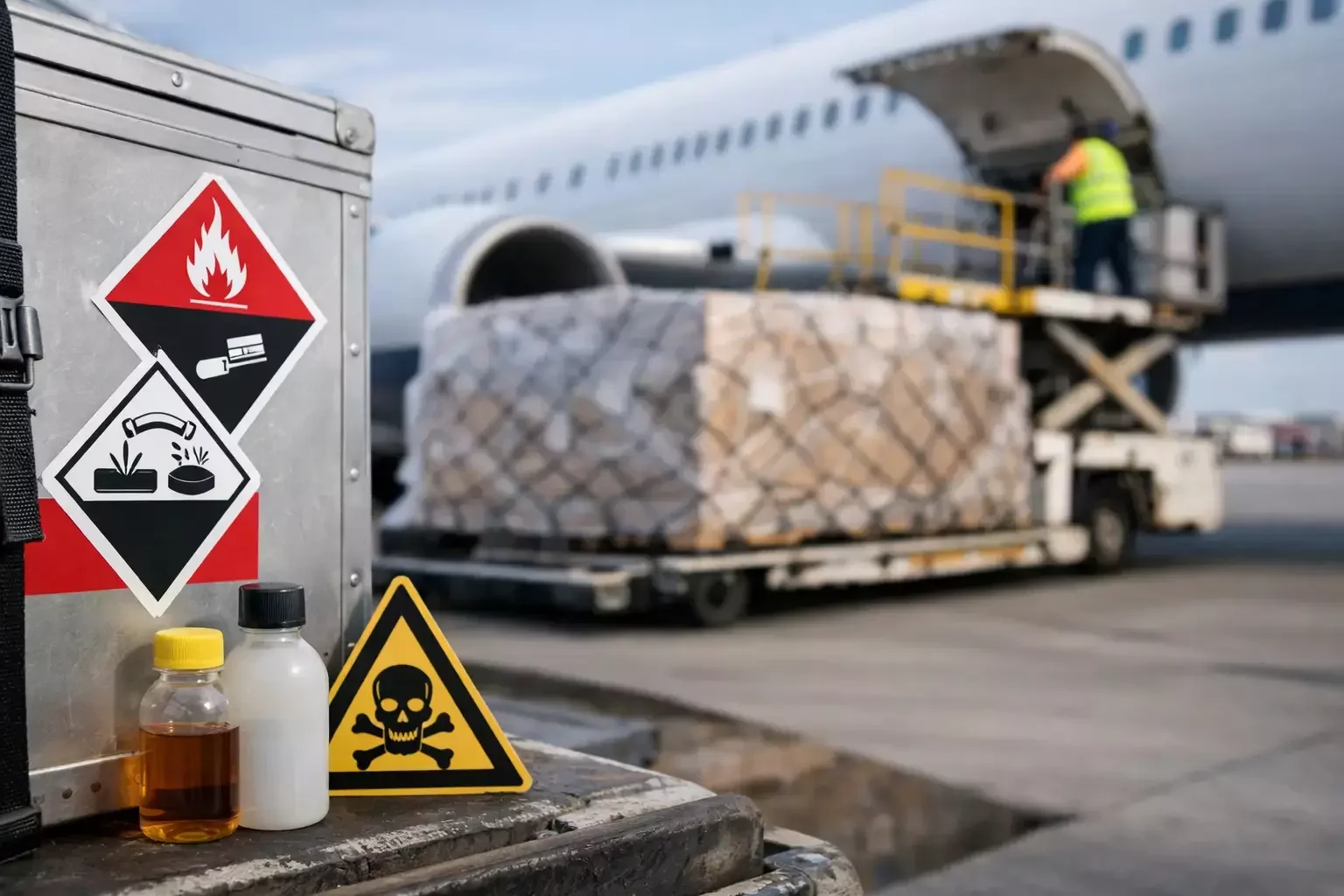
What Is IATA DGR in Air Freight?
A shipment can be perfectly routine until someone notices the contents include lithium batteries, aerosols, paint, dry ice or a corrosive cleaning product. At that point, the question becomes more specific: what is IATA DGR, and does this cargo need to be handled under those rules?
For businesses moving goods by air, that distinction matters because dangerous goods compliance affects packing, paperwork, acceptance and whether the shipment can move at all.
What Is IATA DGR?
IATA DGR stands for the International Air Transport Association Dangerous Goods Regulations. It is the industry standard used to prepare, identify, pack, mark, label, document and handle dangerous goods moved by air.
In practical terms, it is the rulebook used by airlines, freight forwarders, cargo handlers and trained shipping staff to determine whether a substance or article can travel by air, and if so, under what conditions. It sets out detailed instructions covering classification, packing limits, labelling requirements, documentation and handling procedures.
The reason it matters is simple. Air freight operates in a tightly controlled environment. Pressure changes, vibration, heat, confined loading spaces and strict airline acceptance processes leave little room for error. A product that appears harmless in a warehouse can create serious safety risks in flight if it is undeclared, incorrectly classified or packed improperly.
Why IATA DGR Exists
The purpose of IATA DGR is to reduce risk in air transport.
Dangerous goods are not always obviously hazardous. Some are flammable, some are toxic, some react with moisture, and some can generate heat or gas if damaged. Others, such as lithium batteries, become dangerous under certain conditions rather than by default.
The regulations create a common framework so that everyone involved in the shipment works to the same standard. That includes the shipper preparing the consignment, the freight forwarder reviewing the documentation, the handling agent accepting the cargo and the airline carrying it.
Without that consistency, errors multiply quickly. One incorrect UN number, one missing hazard label or one package prepared to the wrong instruction can lead to rejection at the terminal, shipment delays, compliance issues and, in extreme cases, safety incidents.
How IATA DGR Fits With Other Dangerous Goods Rules
When people ask what IATA DGR is, they sometimes assume it is the only dangerous goods regulation that matters. It is not. It sits within a wider compliance framework.
The foundation comes from the ICAO Technical Instructions, which establish the international requirements for dangerous goods by air. IATA DGR is the airline industry publication that builds on those rules and translates them into an operational format used throughout commercial air cargo.
That distinction matters because air freight compliance is not simply about identifying a dangerous product. It is about applying the exact air transport requirements that govern how it must be presented for carriage.
Sea freight and road freight regulations differ, and a product that is acceptable on one transport mode may face additional restrictions when moved by air.
What Kinds of Goods Fall Under IATA DGR?
A wide range of commercial products can fall within IATA DGR requirements.
The obvious examples include chemicals, solvents, compressed gases and laboratory materials. However, many routine industrial and retail products also qualify.
These may include:
- Lithium batteries
- Battery-powered equipment
- Aerosols
- Adhesives
- Perfumes
- Paints and coatings
- Cleaning products
- Pharmaceuticals
- Engine components containing fuel residue
- Dry ice shipments
- Certain temperature-controlled cargo
Some products are fully regulated dangerous goods, while others may qualify as excepted, limited quantity or subject to special provisions.
This is where assumptions create problems. A business may treat a product as standard stock because it moves routinely through warehousing and distribution. Air carriage is different. The transport classification depends on the substance, concentration, packaging format and shipment configuration rather than the commercial description on the invoice.
What IATA DGR Covers in Practice
Classification
The first step is determining whether the goods are dangerous for air transport and, if they are, how they are classified.
This normally involves confirming:
- UN number
- Proper shipping name
- Hazard class
- Subsidiary risk (where applicable)
- Packing group (where applicable)
Every later decision depends on getting this stage right.
Packing Instructions
IATA DGR provides detailed packaging instructions for each dangerous good.
These instructions specify:
- Approved packaging types
- Inner and outer packaging requirements
- Quantity limitations
- Cargo aircraft and passenger aircraft restrictions
- Special handling conditions
Even where a product is permitted for air transport, the packaging must meet the relevant requirements.
Marks and Labels
Packages must display the correct marks and hazard labels so that handlers and airlines can immediately identify the risk.
This may include:
- UN numbers
- Proper shipping names
- Hazard diamonds
- Orientation arrows
- Lithium battery marks
- Cargo aircraft only labels
Missing or incorrect labels are among the most common reasons dangerous goods shipments are rejected.
Documentation
For fully regulated shipments, a Shipper's Declaration for Dangerous Goods is often required alongside the air waybill and commercial documentation.
The declaration confirms that the shipment has been prepared in accordance with the applicable regulations.
Small discrepancies between declarations, safety data sheets, invoices and package markings can result in additional checks or rejection.
Handling and Acceptance
IATA DGR also governs how dangerous goods are accepted, stored, segregated and loaded.
Certain dangerous goods cannot travel together. Others require separation from specific cargo types or must be loaded in designated aircraft positions.
Airlines and handling agents rely on the regulations to determine whether a consignment can safely enter the air freight network.
Who Needs to Understand IATA DGR?
Any business shipping potentially hazardous goods by air needs at least a working understanding of IATA DGR.
That includes:
- Procurement teams
- Export departments
- Warehouse managers
- Compliance personnel
- Logistics coordinators
- Supply chain managers
This does not mean every shipper must become a dangerous goods specialist. It does mean businesses should recognise when a shipment requires additional review rather than treating it as general cargo.
If your products contain batteries, chemicals, pressurised contents or temperature-control agents, dangerous goods assessment should happen early, not after an airline booking has been made.
Why Shipments Get Delayed Under IATA DGR
Most dangerous goods delays stem from three common causes:
- Incorrect product identification
- Documentation errors
- Non-compliant packaging
A vague description such as "electronic parts" or "cleaning supplies" is rarely sufficient for dangerous goods review.
Another common issue is outdated information. Dangerous goods regulations evolve regularly, and packing instructions, airline requirements and acceptance procedures can change.
There are also operational considerations. Some airlines apply additional restrictions to particular commodities, battery configurations or destinations. While IATA DGR provides the framework, actual carriage can still depend on carrier policy and routing.
What Good Dangerous Goods Control Looks Like
A well-managed dangerous goods shipment starts before booking.
Product information is reviewed, classification is confirmed, packaging suitability is checked and documentation is prepared before the cargo reaches the airport.
This early-stage control matters because terminal-side corrections are expensive and unreliable. Repacking, relabelling or rewriting declarations under time pressure creates unnecessary risk.
For businesses shipping dangerous goods regularly, standardised product data, current safety documentation and clear approval processes reduce repeated errors and improve shipment reliability.
What Is IATA DGR Really Telling Shippers?
At its core, IATA DGR tells shippers that dangerous goods by air cannot be managed through assumptions.
The regulations are detailed because the risks are real and because air cargo compliance depends on precise information rather than broad product categories.
For importers and exporters, the value is not purely regulatory. Correct dangerous goods preparation protects bookings, reduces delays, improves airline acceptance and supports reliable delivery performance.
The most useful question is rarely just "what is IATA DGR?" The more valuable question is whether your shipment has been reviewed against those requirements early enough to move without disruption.
Need Support With Dangerous Goods Air Freight?
Understanding IATA DGR is only one part of the process. Successful dangerous goods shipments also depend on correct classification, compliant packaging, accurate documentation and early planning.
ACS Air Freight supports businesses shipping dangerous goods internationally, helping ensure cargo is prepared correctly before it reaches the airline or handling agent.
Whether you are shipping lithium batteries, chemicals, aerosols, dry ice or other regulated cargo, our team can help you navigate the requirements and keep your shipment moving.
Contact ACS Air Freight today to discuss your dangerous goods air freight requirements and request a quotation.