

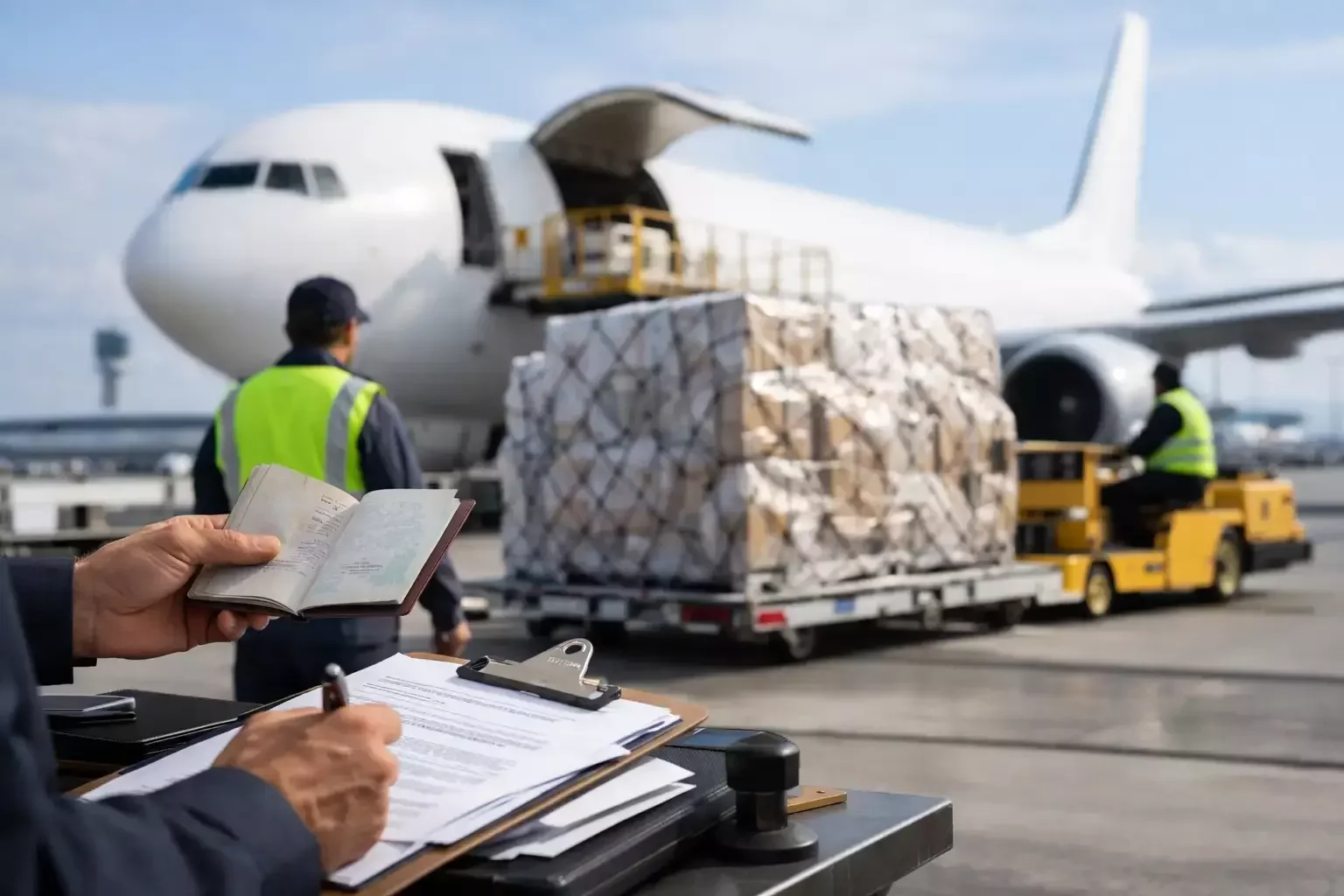
A shipment can be flight-ready, packed correctly and booked on the right service, yet still lose valuable time at the border. In air freight, the difference between a smooth customs clearance and an expensive delay usually comes down to preparation rather than speed. For importers, exporters and procurement teams, customs should be treated as part of the shipment plan from the outset, not as an administrative task once the aircraft has departed.
Whether goods are moving under export or import procedures, customs affects far more than regulatory compliance. It influences delivery schedules, inventory availability, production continuity and customer commitments. Businesses that consistently move cargo without delay are rarely those taking shortcuts at the border. They are the ones that prepare the customs process long before the shipment reaches the airport.
What air cargo customs involves
Air cargo customs is the process of declaring goods to the relevant customs authority so they can legally enter, leave or transit through a country. In practical terms, this includes commodity classification, customs valuation, country of origin, licensing requirements where applicable, security data, commercial documentation and the formal submission of customs declarations.
For commercial freight, customs is about much more than duties and taxes. It is also a control point for restricted goods, prohibited commodities, trade policy measures and documentary compliance. A shipment may arrive exactly as planned, but if the declaration does not accurately reflect the goods or supporting documents are incomplete, clearance can stop immediately.
That is why customs performance directly affects supply chain reliability. Delays at the border can increase storage costs, disrupt production schedules and undermine customer service just as quickly as delays during transport itself.
Why customs delays happen in air freight
Most customs delays are preventable, but they rarely have a single cause. More often, several smaller issues combine together: an incomplete commercial invoice, an inaccurate product description, inconsistent values, missing licences or unclear instructions between buyer, seller and freight forwarder.
Commodity classification remains one of the most common causes of delay. If the tariff code used does not accurately represent the goods, customs authorities may request further technical information, reassess duties or suspend clearance until the declaration has been corrected.
Valuation can create similar issues. Freight charges, insurance costs, assists and Incoterms all influence how customs value is calculated. Small inaccuracies may appear insignificant commercially but can trigger unnecessary customs queries.
Country of origin also requires careful attention. Preferential trade agreements, anti-dumping measures and product controls often depend on origin, not simply where goods are shipped from. Describing products simply as "parts" or "equipment" rarely provides customs authorities with sufficient information to assess regulatory requirements.
Businesses regularly moving international freight should also understand how customs planning fits alongside the wider airline cargo booking process, as both rely on accurate shipment data from the very beginning.
Air cargo customs documents that matter most
The required documents vary depending on the shipment, but several consistently determine whether customs clearance progresses smoothly.
The commercial invoice is the foundation of the declaration. It should clearly identify the buyer and seller, provide an accurate commercial description, show quantities, unit values, total values, currency, Incoterms, country of origin and any relevant product references.
The packing list supports the physical movement by confirming package counts, dimensions, weights, pallet or carton identification and package marks. Customs officers frequently compare this information against both the declaration and the physical cargo.
The air waybill links the transport movement with the customs process by identifying the shipper, consignee, routing and transport details. Depending on the commodity, further documentation may also be required, including licences, certificates of origin, dangerous goods declarations, health certificates or product-specific compliance documents.
Businesses that standardise documentation across repeat shipments generally experience fewer customs queries because customs authorities receive consistent, predictable information every time.
The clearance process in practice
For commercial air freight, customs preparation begins before the cargo reaches the airport. Shipment information is reviewed, commodity codes confirmed, documentation validated and any licensing requirements identified before airline acceptance takes place.
Export declarations are normally submitted before departure, while import entries are often prepared before arrival so clearance can begin immediately after the aircraft lands.
Some shipments will be selected for documentary review, x-ray screening or physical examination. Although selection cannot always be predicted, accurate paperwork and well-prepared cargo usually reduce the time required to complete inspections.
This is why air cargo tracking and visibility becomes particularly valuable. Monitoring customs status alongside flight milestones gives businesses a much clearer picture of when freight is likely to become available for onward delivery.
Where responsibilities become unclear
Many customs delays occur because responsibilities have not been clearly agreed.
The supplier assumes the buyer will provide customs information.
The buyer assumes the freight forwarder already has everything required.
The warehouse dispatches cargo before documentation has been finalised.
None of these situations are unusual, but each creates unnecessary risk.
Incoterms help define commercial responsibilities, yet they do not replace operational planning. Importers still need to confirm who is acting as importer of record, who is responsible for customs data, whether deferment facilities are available and which clearance procedure will be used.
This becomes even more important in cross-trade movements and multi-country supply chains where manufacturers, exporters, sellers and importers may all be different organisations.
Controlled and specialist cargo needs closer customs planning
Certain commodities require additional customs preparation from the outset.
Dangerous goods remain one of the most obvious examples. Even where transport requirements have been met, customs declarations must still accurately describe the goods and reflect the supporting commercial documentation.
High-value machinery, aerospace components, electronics, regulated chemicals, dual-use goods and controlled products often require additional technical review before bookings are confirmed.
Urgent shipments can also increase pressure. When production is waiting or replacement parts are required immediately, there can be a temptation to move first and resolve documentation later. In practice, this often creates the very delays businesses are trying to avoid.
Companies regularly moving specialist cargo should ensure customs preparation sits alongside hazardous materials by air procedures where applicable, rather than treating them as separate activities.
How businesses can reduce customs risk
Reducing customs risk starts long before declarations are submitted.
Good preparation usually includes:
- Using complete commercial product descriptions
- Verifying tariff classifications
- Confirming customs values
- Checking country of origin
- Identifying controlled goods before booking
- Reviewing documentation before collection
- Confirming consignee and importer information early
Internal communication also plays a major role. Procurement, finance, warehouse and shipping teams often each hold different parts of the required information. Bringing those details together before booking significantly reduces customs errors later.
Working with a single freight partner responsible for booking, documentation review, customs coordination and delivery planning also improves visibility across the entire movement.
What good customs support looks like
Effective customs support is built around preparation rather than reaction.
That means reviewing documents before submission, identifying discrepancies early, escalating controlled goods before dispatch and maintaining clear communication whenever customs authorities require additional information.
No customs process is entirely predictable. Border policies change, inspections happen and certain commodities naturally receive greater scrutiny than others.
However, businesses that consistently prepare accurate shipment data experience far fewer disruptions and respond much faster when exceptions arise.
For regular importers and exporters, customs should be considered part of the freight operation itself, sitting alongside booking, documentation, handling and delivery planning rather than existing as a separate administrative function.
Need support with air cargo customs?
Whether you're importing into the UK or exporting internationally, ACS Air Freight coordinates customs documentation, shipment planning and onward delivery as one managed process. Our team helps identify potential customs issues before they become costly delays.