

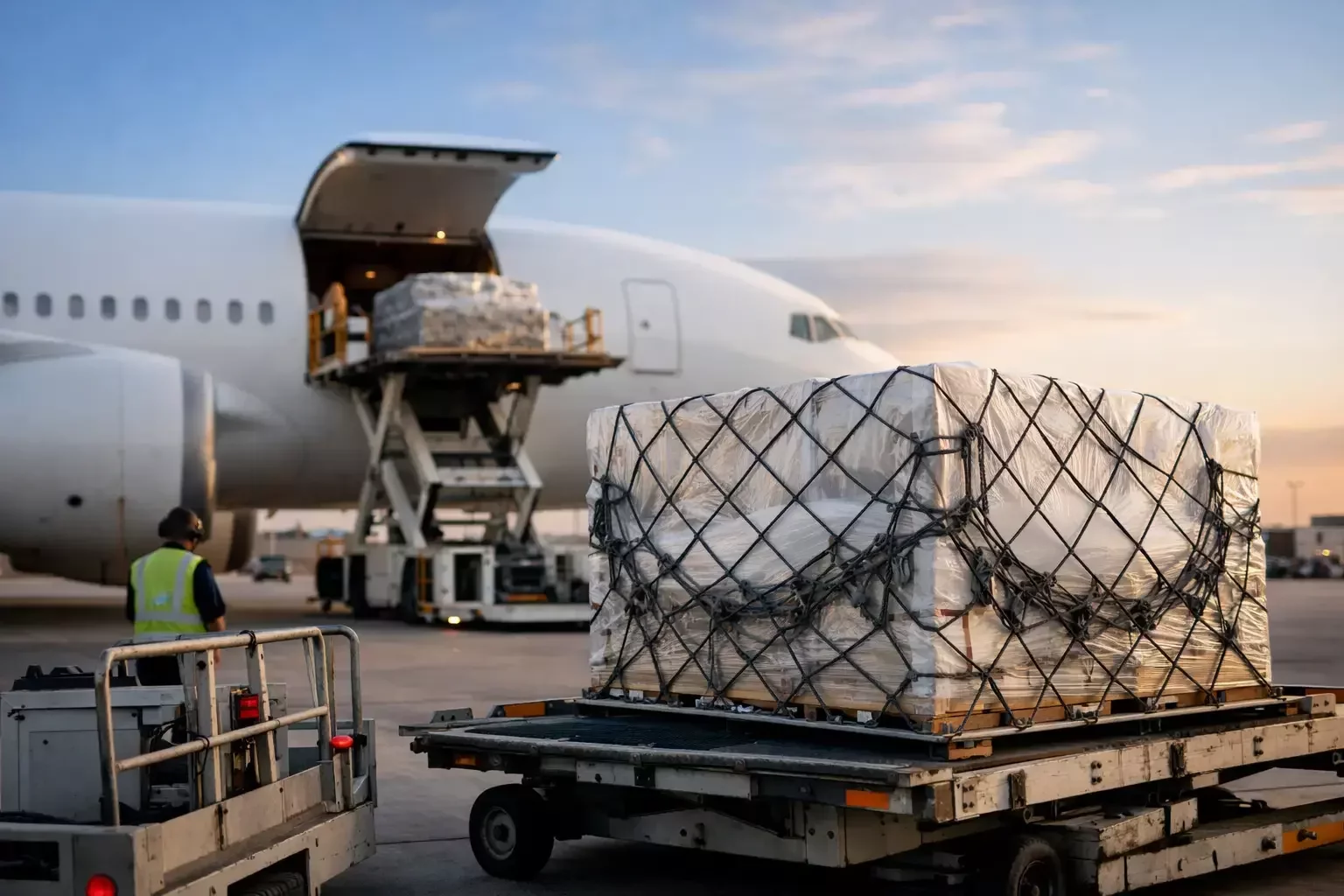
When a production line is waiting on a missing component, or a customer order cannot slip into next week's shipping window, air freight becomes an operational decision rather than simply a transport preference. For importers, exporters and procurement teams, the issue is rarely just speed. It is whether the shipment can move compliantly, clear customs without delay and reach the consignee with full control at every stage.
That is where air freight becomes a practical supply chain tool rather than simply a transport option. It supports urgent replenishment, high-value consignments, specialist cargo and commercially sensitive goods where transit time matters, but so does reliable execution. The movement itself may be fast, yet the success of the shipment depends on planning, documentation and coordination long before cargo reaches the terminal.
What air freight is really buying your business
At a basic level, air freight is the movement of goods between international airports. In practice, businesses are not simply buying space on an aircraft. They are buying shorter lead times, more predictable transit windows on selected routes and a way to reduce the commercial impact of supply chain disruption.
That value becomes clear when delay carries a measurable business cost. A manufacturer may need replacement components to prevent production downtime. A distributor may need stock replenished quickly to protect customer commitments. A procurement team may be recovering time already lost through supplier delays or customs disruption. In each case, the real benefit of air freight is preserving operational continuity rather than simply moving goods faster.
Air freight is not automatically the right solution for every shipment. Sea freight remains better suited to many bulky, lower-priority consignments, while road transport is often the most practical choice for regional European movements. However, where time, product value or commercial exposure are high, air freight frequently provides the most controlled and commercially effective option.
How an air freight shipment is managed
A successful shipment starts by confirming whether the cargo is suitable for air carriage and how it should be booked. Weight, dimensions, packaging, commodity type, origin and destination all influence airline availability, handling requirements and routing options. If the goods are hazardous, temperature-sensitive, security-controlled or unusually shaped, those requirements need to be understood before capacity is confirmed.
Documentation review follows immediately afterwards. Commercial invoices, packing lists, export declarations, import documentation, licences and commodity-specific paperwork all need to align. Small inconsistencies can create disproportionate delays, particularly where customs systems identify missing values, unclear product descriptions or mismatched consignee information.
Once airline space has been secured, the cargo is prepared for terminal acceptance. Depending on the shipment, this may include labelling, security screening, dangerous goods checks, handling instructions and careful management of airline cut-off times. Missing a terminal acceptance deadline by only a few hours can result in the shipment missing its planned flight and losing an entire day. Understanding Air Freight Cut Off Times Explained can help businesses avoid these costly delays.
After uplift, active shipment management remains essential. Flight schedules can change, cargo may be transferred to later services and customs formalities at destination often require immediate attention. Final delivery should never be viewed as a separate task. Airport-to-door coordination, customs release and onward transport need to be managed as one continuous movement rather than passed between different providers.
Where delays usually happen in air freight
Many businesses assume the aircraft journey is the greatest source of risk. In reality, most delays occur before the aircraft even leaves the ground.
Incorrect documentation, incomplete customs information, non-compliant packaging, inaccurate shipment data or late arrival at the cargo terminal can all delay even the most urgent movement.
Dangerous goods illustrate this clearly. If classification, packaging, marking or documentation fails to meet air transport regulations, the shipment will not be accepted for carriage. The same applies to commodities requiring export licences, health certificates or destination-specific approvals. The urgency of the shipment never reduces the compliance standard.
Customs preparation is another common pressure point. Fast transit times deliver little value if cargo is then held pending declaration review or supporting documentation. Experienced freight forwarders therefore manage the entire movement from the beginning, including collection, airline booking, export formalities, arrival handling, customs clearance and final delivery, rather than treating each stage separately.
Where delays usually happen in air freight
Many businesses assume the aircraft journey is the greatest source of risk. In reality, most delays occur before the aircraft even leaves the ground.
Incorrect documentation, incomplete customs information, non-compliant packaging, inaccurate shipment data or late arrival at the cargo terminal can all delay even the most urgent movement.
Dangerous goods illustrate this clearly. If classification, packaging, marking or documentation fails to meet air transport regulations, the shipment will not be accepted for carriage. The same applies to commodities requiring export licences, health certificates or destination-specific approvals. The urgency of the shipment never reduces the compliance standard.
Customs preparation is another common pressure point. Fast transit times deliver little value if cargo is then held pending declaration review or supporting documentation. Experienced freight forwarders therefore manage the entire movement from the beginning, including collection, airline booking, export formalities, arrival handling, customs clearance and final delivery, rather than treating each stage separately.
Air freight and customs need to be planned together
For commercial shippers, customs is not an administrative task that happens after booking. It forms part of the transport plan itself.
Commodity codes, customs values, Incoterms, origin information and importer or exporter responsibilities all influence whether goods move smoothly through border controls. A shipment may depart exactly as planned yet still lose valuable time if customs instructions are incomplete or declarations cannot be processed on arrival.
This is particularly important for UK businesses trading internationally. Controlled goods, specialist products and high-value commercial cargo often require greater customs preparation than standard shipments. The earlier documentation is reviewed, the greater the opportunity to resolve issues before they affect delivery schedules.
Our guide to Air Cargo Customs for Commercial Shipments explains how customs planning helps keep international cargo moving without unnecessary delays.
The most effective approach is to treat customs readiness as part of booking readiness. Confirming document requirements, importer and exporter responsibilities, declaration data and commercial information before cargo reaches the airport helps prevent costly delays later in the movement.
When specialist handling changes the job
Not every shipment can be treated as standard commercial freight. High-value goods may require enhanced security procedures. Dangerous goods need approved packaging, specialist documentation and trained handling. Oversized cargo depends on aircraft capability, loading equipment and terminal facilities. Time-critical shipments often require the next available uplift, supported by continuous milestone monitoring from collection through to delivery.
These movements require more than simply booking airline space. They need operational planning that reflects the realities of international air freight. A hazardous consignment, for example, may be fully compliant yet still miss its intended flight if documentation is not completed before airline acceptance. An urgent machine component might be ready for collection immediately but still require repacking to meet air transport standards before it can be accepted.
This is where having a single operational contact becomes valuable. Routing decisions, customs preparation, compliance checks, airline cut-off times and delivery planning can all be managed together, reducing the risk of delays caused by fragmented communication.
Businesses regularly moving specialist cargo should also review How to Ship Hazardous Materials by Air, which explains the compliance requirements behind dangerous goods movements.
Choosing air freight for the right reasons
Air freight is often described simply as the fastest transport mode, but speed is only part of the decision.
Urgency is usually the first consideration, particularly where production downtime, customer commitments or stock shortages are involved. Product value also plays an important role. For higher-value goods, the financial cost of delayed delivery or extended inventory holding can outweigh the additional transport cost.
Reliability is another factor. On many international trade lanes, shorter transit times and more predictable schedules allow businesses to improve planning, reduce safety stock and respond more effectively to customer demand.
That said, air freight should not become the automatic solution for every urgent-looking shipment. Sometimes only a small proportion of an order is genuinely time-critical. Moving the critical items by air while sending the remaining stock by sea or road can often provide the best commercial outcome. Good freight planning is rarely about choosing one transport mode exclusively. It is about selecting the right combination for the operational requirement.
What good air freight support looks like
For procurement teams and logistics managers, dependable air freight support is demonstrated through execution rather than marketing claims.
Can routing options be confirmed quickly?
Are documentation issues identified before cargo reaches the airport?
Does someone actively monitor airline cut-off times, customs status and shipment milestones?
When disruption occurs, are practical alternatives presented immediately?
These are the questions that distinguish a managed freight service from a simple booking provider.
A capable freight forwarder also understands the commercial priorities behind the shipment. The objective is not simply to secure airline space but to recommend the most appropriate service level. Some consignments genuinely require the fastest available uplift, while others can move through consolidated services if timing allows. Matching the service to the business requirement is an important part of professional freight planning.
For companies shipping internationally on a regular basis, consistency becomes just as valuable as speed. An experienced freight partner can help standardise documentation, identify recurring compliance issues and improve planning across repeat movements. Over time, that operational discipline reduces avoidable disruption throughout the wider supply chain.
Air freight as a control tool, not just a fast one
The strongest reason to choose air freight is not simply that aircraft move quickly. It is that, when properly planned, air freight provides businesses with greater control over commercially important international shipments.
That control comes from accurate booking, compliant documentation, coordinated customs formalities, active shipment monitoring and reliable delivery planning from origin to final destination.
When cargo is commercially critical, the most important question is rarely whether it can fly. The better question is whether the entire movement can be executed without avoidable failure points. Businesses that approach air freight in this way tend to protect service levels more effectively, reduce operational disruption and make better long-term supply chain decisions.
For many organisations, air freight becomes far more than an emergency solution. Used strategically, it is a practical tool for protecting production, maintaining customer commitments and improving resilience across international supply chains.
Need expert support with commercial air freight?
Whether you're moving urgent production parts, high-value commercial goods or specialist cargo, ACS Air Freight manages bookings, compliance, customs formalities and delivery planning through a single operational contact, helping your shipments move with greater control from collection to final delivery.