

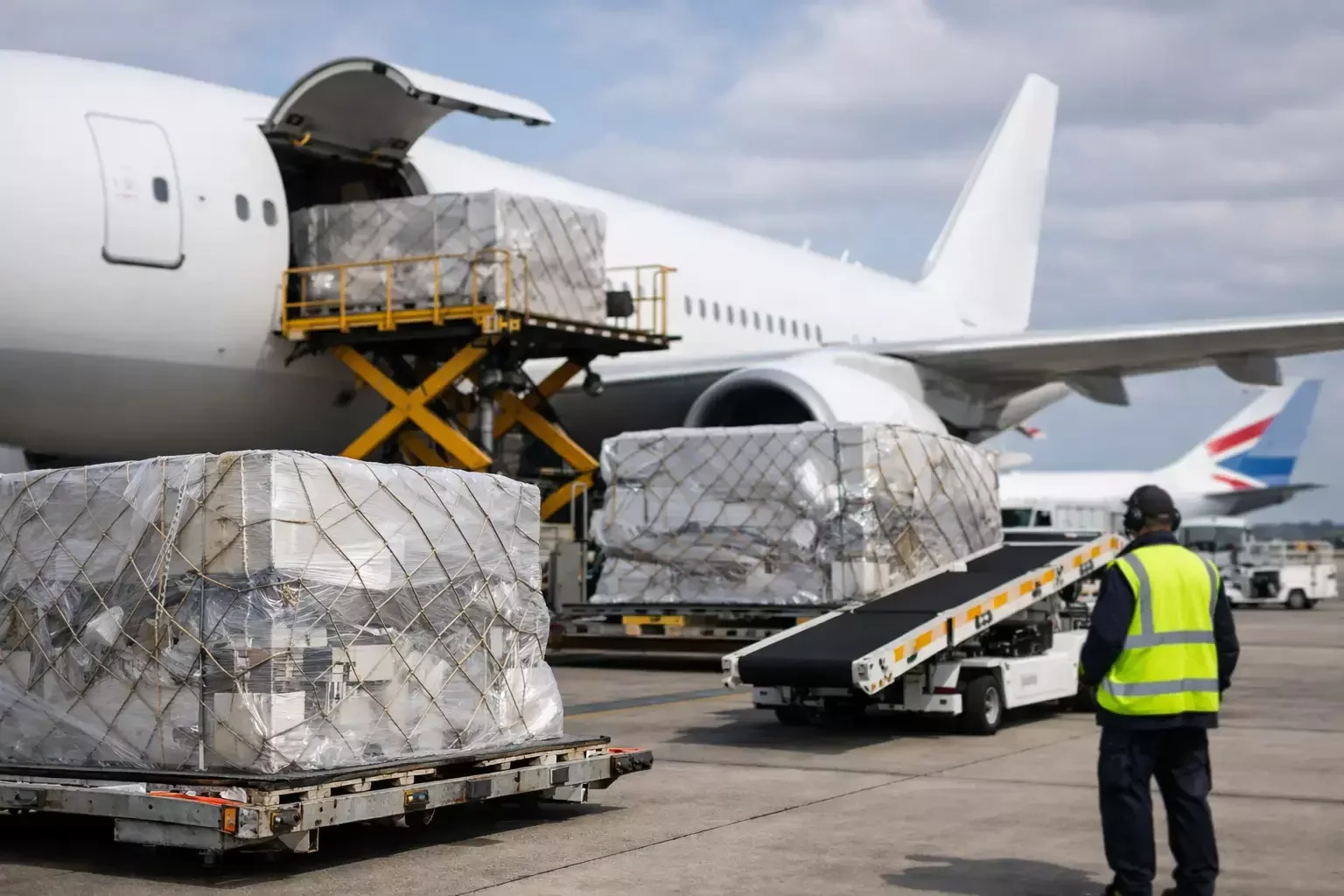
A delayed import shipment is rarely caused by the aircraft itself. More often, delays begin with incomplete paperwork, incorrect customs data or planning decisions made before the cargo ever reaches the departure airport.
More often, the issue sits in an incomplete commercial invoice, an incorrect commodity code, missing import authorisation or a delivery plan that was not confirmed before the cargo arrived. This guide to UK import air cargo explains the controls that help businesses move commercial goods into the UK with fewer avoidable delays.
Air freight is often selected because the goods are time-sensitive, high-value, production-critical or difficult to source. That speed can be lost quickly if customs, airline handling and onward transport are treated as separate tasks. Effective import planning brings them together before the shipment is collected at origin.
When air cargo is the right import method
Import air cargo is suited to consignments where transit certainty matters more than using the lowest-cost transport mode. Typical examples include urgent production components, replenishment stock, technical equipment, pharmaceutical inputs and high-value commercial goods. It can also be appropriate where an overseas supplier is located far from a major seaport or where a shipment needs to connect with a fixed installation, manufacturing or retail schedule.
The trade-off is that air freight requires accurate information early. Airline acceptance rules, security requirements, cargo dimensions and documentation all affect whether goods can be booked and uplifted as planned. For dense or bulky freight, chargeable weight may differ substantially from physical weight, so packaging and shipment design should be reviewed before booking.
Guide to UK import air cargo: the core process
A controlled import movement starts with a clear shipment brief. This should confirm the goods, quantities, weights, dimensions, origin, supplier collection point, required arrival date, importer details and final delivery address. It should also identify whether the goods are regulated, temperature-sensitive, valuable, fragile or classified as dangerous goods.
1. Confirm the importer and customs responsibilities
The UK importer is responsible for ensuring that the customs declaration is correct and that any applicable duty, import VAT or other charges are properly accounted for. Before goods move, the importer should have a valid Economic Operators Registration and Identification number, known as an EORI number, and a clear approach to VAT accounting.
The Incoterms agreed with the supplier also need careful review. They determine which party arranges carriage, insurance and export formalities, but they do not remove the UK importer’s responsibility for import compliance. If the supplier arranges the main carriage, the importer should still ensure the customs agent has the right instructions, documents and authority to act.
For repeated imports, keeping a documented import procedure is useful. It gives procurement, finance and warehouse teams a shared view of who supplies the documents, who approves customs data, how duty is paid and who receives arrival notifications.
2. Prepare the shipment documents before uplift
The commercial invoice is central to customs clearance. It should accurately describe the goods, show the seller and buyer, state the transaction value and currency, identify the country of origin and include the agreed Incoterms. Generic descriptions such as “parts”, “samples” or “equipment” are unlikely to provide enough detail for reliable classification.
A packing list should match the physical consignment, showing package counts, weights and dimensions. The air waybill records the carriage instructions and enables the cargo to be tracked through airline and terminal processes. Depending on the goods and country of export, further evidence may be required, such as certificates of origin, licences, conformity documentation or product-specific certificates.
Documents should agree with each other. A mismatch between the invoice quantity, packing list and air waybill can lead to queries at the terminal or during customs processing. It is far easier to correct this before uplift than after the cargo has arrived.
Our guide to Air Cargo Customs for Commercial Shipments explains how accurate documentation and customs preparation help reduce clearance delays and keep imports moving efficiently.
3. Classify goods and establish their customs treatment
Commodity classification determines the customs procedure, duty rate, import controls and statistical treatment that may apply. The correct commodity code depends on what the product is, what it is made from, how it functions and, in some cases, how it is presented or used.
Country of origin is a separate issue from the country of dispatch. Goods shipped from one country may have been manufactured elsewhere. This distinction can affect duty liability and eligibility for preferential tariff treatment under a trade agreement. A supplier declaration alone may not always provide sufficient evidence, particularly where preference is being claimed.
Businesses importing the same products regularly should retain classification decisions, product specifications and origin evidence. This supports consistency over time and provides an audit trail if customs authorities request further information.
4. Arrange airline booking and terminal handling
Once the cargo is ready and the documents have been checked, the shipment can be booked with an airline or through a freight forwarder. The booking should reflect the actual cargo profile, including dimensions, stickability, packaging type and any special handling needs. A shipment that cannot fit the planned aircraft configuration may be deferred even where space was initially available.
At origin, goods are collected or delivered to the cargo terminal, screened where required and accepted for carriage.
Businesses arranging overseas shipments should also read How to Arrange Import Air Freight for UK Businesses, which explains how planning before collection helps prevent delays later in the movement.
Export customs formalities must be completed in the exporting country before departure. The freight forwarder should monitor acceptance, flight confirmation and any operational changes that could affect arrival.
For urgent shipments, a direct service may offer greater transit control, while a routed service can be suitable where timing is less critical. The right choice depends on the required delivery date, cargo type, origin airport capability and the level of contingency needed.
Customs clearance on arrival in the UK
When cargo arrives, it is moved into an approved temporary storage facility at or near the airport until customs release is granted. The customs declaration is submitted using the shipment documents and agreed customs instructions. Duty and import VAT treatment are then applied according to the declared goods, value, origin and procedure.
Clearance can be delayed where information is incomplete, documents conflict or the goods require examination. Controlled commodities may need additional authorisations before release. Businesses should not assume that a flight arriving on schedule means goods are immediately available for collection or delivery.
A customs broker or freight forwarder can submit declarations on the importer’s behalf, but the importer should remain involved in the approval of key data. This is particularly relevant for commodity codes, customs value, origin, licences and use of any duty relief or special procedure. A single point of contact between the importer, supplier, customs team and delivery provider reduces the chance of conflicting instructions.
In practice, goods often arrive on schedule but remain unavailable because the customs declaration cannot be completed without additional information from the importer. Preparing declarations before arrival is one of the simplest ways to reduce unnecessary terminal storage and delivery delays.
Delivery from the airport to the final destination
After customs release, cargo can be collected from the terminal and moved by road to the consignee’s premises or another nominated location. Delivery planning should begin before arrival, especially for large, valuable or operationally critical consignments. Confirm site opening hours, booking-in requirements, unloading equipment, security restrictions and the named receiving contact.
Some consignments need more than a standard vehicle collection. Fragile equipment may require specialist restraint and handling. Temperature-sensitive goods may need controlled conditions. Dangerous goods require compliant transport, documentation and trained handling through the onward journey. Where the delivery is urgent, vehicle availability and terminal collection timing should be aligned to avoid unnecessary storage.
Proof of delivery should be retained alongside the air waybill, customs entry and commercial documents. These records support stock control, supplier performance reviews, VAT accounting and any later customs query.
Common causes of delay and how to reduce them
Most import disruption can be prevented through preparation rather than intervention after arrival. The recurring issues are familiar: vague product descriptions, late invoices, incorrect weights, unapproved customs values, missing licences and delivery sites that cannot receive cargo when it is released.
For higher-risk or recurring movements, use a pre-shipment checklist that covers product data, customs classification, origin, dangerous goods status, documentation, airline booking details and delivery instructions. This does not need to be burdensome. It needs to be owned by the right people and completed early enough for problems to be resolved before the freight reaches the terminal.
It is also sensible to build contingency into critical imports. That may mean allowing time for a customs examination, having an alternative delivery slot or agreeing escalation contacts across the supplier, freight forwarder and receiving site. Visibility is most valuable when it leads to a decision before a delay becomes operationally significant.
Maintaining visibility throughout the shipment also allows businesses to respond more quickly when delays occur. Air Cargo Tracking and Visibility explains how milestone tracking supports better operational decision-making.
Selecting operational support for import air freight
A freight forwarding partner should be able to coordinate airline capacity, documentation checks, customs clearance and airport-to-door delivery as one managed process. For complex movements, experience with dangerous goods, controlled products, high-value cargo and urgent consignment handling is particularly relevant.
ACS Air Freight manages import air cargo through a single point of contact, coordinating the shipment from booking and compliance review through customs formalities and final delivery. The objective is not simply to move freight quickly, but to keep each stage visible, compliant and aligned with the importer’s operational requirements.
The strongest import process is one that starts before the goods leave the supplier. When product data, customs instructions and delivery arrangements are confirmed early, air cargo can provide the control and responsiveness that critical supply chains depend on.
Need support with UK import air cargo?
ACS Air Freight manages commercial import shipments from overseas supplier collection through to UK customs clearance, airport handling and final delivery.
With a single operational point of contact, we coordinate documentation, compliance, airline bookings and delivery planning to help businesses keep critical imports moving without unnecessary delays.